
How Bench Warrants Work in Missouri
A Missouri bench warrant is a court order, not a new criminal charge on its own. Judges issue process from the bench when someone fails to appear, breaks a release condition, or ignores another court direction. "Failure to appear," usually shortened to FTA, simply means a required court date was missed. The order tells an officer to bring the person before the issuing court so the case can move again. What the order actually requires lives in that court's docket, not in any summary. Missouri also uses "FTA warrant" and, in some records, "capias" for the same kind of order. The labels do not establish identical facts. A missed date can matter in a felony, a misdemeanor, a municipal ticket, or a support proceeding, and each may sit in a different division. An unpaid fine alone never supports a blanket claim that a bench warrant exists statewide. So ask the issuing clerk what order was entered, whether it is still active, and what step returns the case to the judge. Every Missouri warrant stays tied to its own court and its local service channel, which is why the clerk, not a search box, gives the answer that counts.
Missouri Bench Warrants Follow Court Divisions
Missouri has 46 judicial circuits. Trial-level matters run through the Circuit Court of Missouri, though the docket may sit in an associate or municipal division. A city ordinance or traffic ticket can stay in its municipal division even though that division belongs to the circuit court under RSMo §479.020. A misdemeanor or other limited-jurisdiction matter may land in an associate division instead. That split matters when you check a missed date, since a county sheriff roster or felony case search may not show the municipal case behind the bench warrant. The Missouri courts' court-structure overview describes the circuit system, and §478.011 sets out the 46-circuit arrangement. Read the citation, summons, or court notice for the court and division, then search that location in Case.net if the case is public. The Missouri Case.net portal is a public case-information source, not a statewide bench-warrant index, so its result can point toward the right docket while the local clerk confirms present warrant status. Use Browse Counties to reach the correct county or independent-city entry.
| Missouri case route | Common matter | Where to confirm |
|---|---|---|
| Associate Circuit Division | Misdemeanor and other limited-jurisdiction cases | Clerk for the issuing circuit division |
| Municipal Division | City ordinance and traffic cases | Municipal division clerk or local court staff |
| Family or support case | Case-specific family-court process | Clerk for the circuit division handling the case |
Note: Missouri has no separate statewide justice-of-the-peace tier, so match the circuit and division printed on the case notice before you call.
Bench Warrant Issuance in Missouri
Issuance begins with a court event or order, never with a consumer search. A judge in Missouri decides whether the law and the case record support a warrant. Municipal divisions follow Supreme Court Rule 37 and the applicable statutes. The resulting order names the person or case and directs an officer to act, and from that point court staff and the responsible law-enforcement agency handle the record and its execution. No single public Missouri feed shows every warrant, and the state sets no statewide update timetable for bench-warrant entries. The label alone rarely explains why an order exists. Someone may have missed a hearing, violated release conditions, or failed to follow another direction. The court might set a new hearing, require a motion, or direct the person to address bond first. A warrant can be recalled or cancelled once the court's grounds end, but that court action must happen and reach law enforcement. Paying an amount, appearing at another office, or waiting for an online listing to change does not resolve the order by itself. Ask the clerk which judicial division issued it and what written step is required.
Missouri Municipal Bench Warrants Under Rule 37
Missouri keeps municipal warrants on a short rule-based leash. Rule 37.43(b) lets a municipal judge issue a warrant when there are reasonable grounds to believe a summons will not bring the person to court. Facts showing danger to a victim, the community, or another person can also support it. Rule 37.45 generally requires a judge's signature, subject to one narrow rule-authorized exception. Check the actual order before assuming anything. A missed date is not always an arrest warrant. An unpaid ticket alone does not trigger one. The Missouri Supreme Court's Rule 37 Appendix A minimum operating standards also set recall duties for municipal courts. A warrant should be recalled or cancelled as soon as practicable after the case is resolved or the original grounds no longer exist. The clerk must tell law enforcement without delay. That duty belongs to the court, and it is not a promise that every web page updates instantly. The municipal division controls the order, while the serving agency may need time to refresh its operational record. Ask both offices what was sent. Then confirm whether anything else remains due.
Key point: A Missouri municipal bench warrant turns on the court's stated basis and order. A fine balance, DOR action, or Case.net result alone does not prove warrant status.
Note: Missouri Rule 37's recall direction covers the court's process, so ask the issuing division what documents or appearances it requires.
How Bench and Arrest Warrants Differ
A bench warrant returns a person to an existing case. In Missouri, an arrest warrant starts from a criminal accusation and probable-cause review. Both can put a person in custody. Their triggers and court questions differ. For a new Missouri charge, the felony process may involve a complaint, a judge's probable-cause decision, and a warrant or summons. A bench warrant asks a different question. It calls for the person to answer a pending matter or missed obligation. Telling them apart takes the court record. A short label in an online Missouri result may not be enough. Missouri also issues search warrants, which authorize searches under separate law. In Missouri, a bench warrant does not settle the underlying case. Missouri bond rules may permit release while a case continues. Bond is not a fine or a final judgment. If the matter looks like a new charge rather than a missed date, the state's Arrest Warrant Lookup page covers the separate probable-cause and service process.
| Question | Bench warrant | Arrest warrant |
|---|---|---|
| Why issued | Missed appearance or other court-process issue | Criminal accusation supported by the required judicial finding |
| Case posture | Usually an existing court matter | May begin custody process in a charged matter |
| What to ask | What appearance, motion, or compliance step is ordered? | Which court issued it, what release terms apply, and how to appear? |
Missouri Capias and Bench Warrant Labels
Missouri statutes use "capias" in some settings. Local Missouri agencies may call the court process they receive a "capias warrant." That label is not a synonym for every bench warrant. It is not an automatic fine-collection writ either. Missouri has no statewide public capias-pro-fine database. No single state definition fits every local label. Read the order's own language instead. Identify the issuing division, the underlying case, the reason, and the conditions. A clerk can say whether the court calls it a capias, bench warrant, or FTA warrant. The clerk can also explain what action the order requires. One Missouri county example shows how much these operational labels vary. The Jackson County Sheriff's Fugitive Apprehension Unit page describes processing capias warrants and law-enforcement database entries for that jurisdiction. That is one local agency's role. It is not a statewide name or a public search method for Missouri.
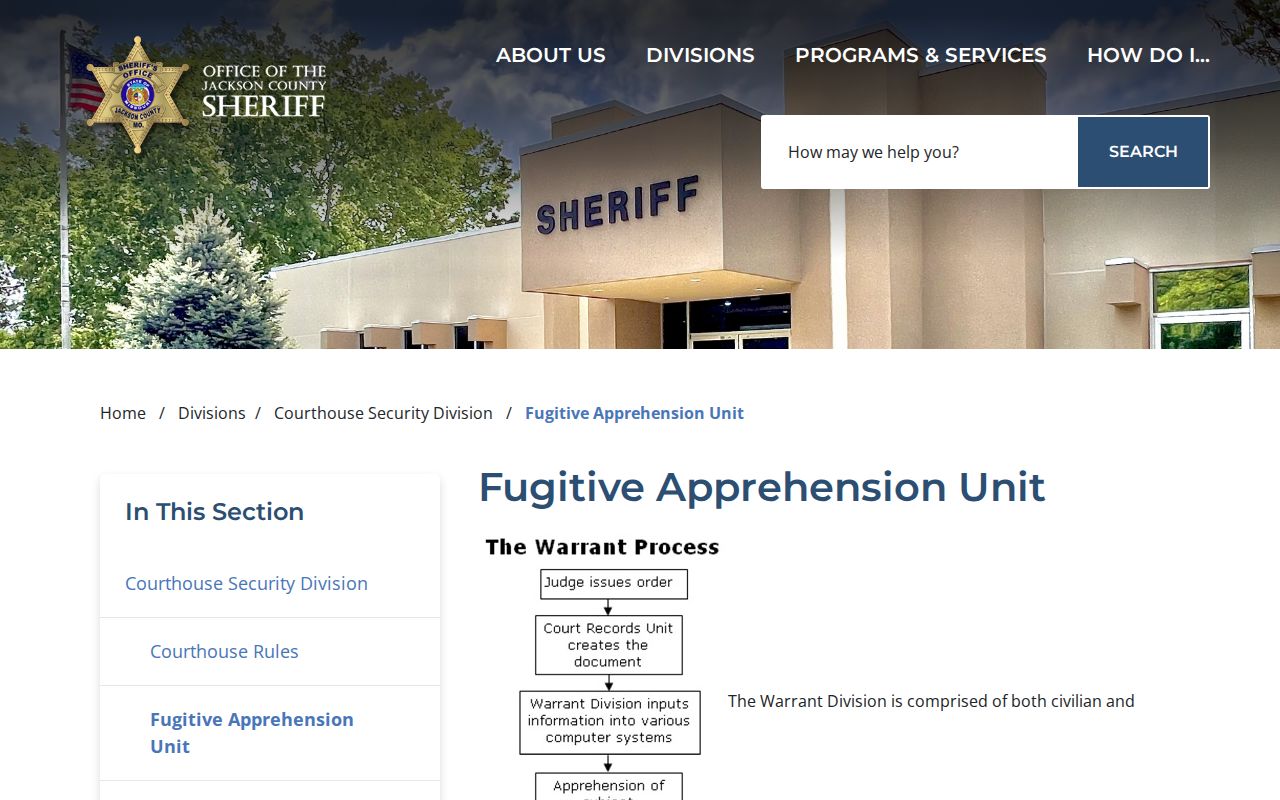
The local example helps explain the handoff after a court issues a warrant. It does not prove every Missouri county matches it. Terms, online records, and phone policies can differ.
- Bench warrant
- A judge's order to bring a person before the court.
- FTA
- Failure to appear at a required court event.
- Capias
- Court process directing an officer to take a person into custody; the reason depends on the order.
- Recall
- A court action withdrawing a warrant, often after compliance or a new date is set.
- Quash
- A court action setting aside an order or process.
Clearing a Bench Warrant in Missouri
First, confirm the issuing Missouri court. Then check whether the order is still active. Search Missouri's Case.net if the matter is public. Next, contact the municipal, associate, or circuit clerk named in the notice. Ask what event was missed. Ask whether the court will set a new date, whether a motion to recall or quash is needed, and whether bond applies. A hidden docket does not prove absence. The clerk can explain how an authorized party confirms a protected or locally held case. Missouri has no universal recall form. There is no statewide clearance counter. No standard walk-in policy exists either. Before appearing, ask whether counsel is advised, where to report, what identification or paperwork to bring, and whether the court expects a bond payment, a new hearing, or a written motion. In Missouri, if bond is ordered, the individual case's terms control. Missouri's Rule 33.01 and RSMo §544.455 govern release conditions in covered criminal cases. Posting bond may secure release while the case continues; it does not erase the charge or satisfy a separate obligation.
- Locate the citation, case number, court notice, or other record that identifies the Missouri court and division.
- Ask the issuing clerk to confirm status and name the court-approved next step, including any motion or appearance.
- Confirm bond type, amount, accepted payment route, and the next court date before making arrangements.
- After the judge acts, ask when recall was sent to the sheriff or police agency and how to confirm it reached that agency.
Caution: A Missouri bench warrant remains a court order until the issuing court changes it; do not rely on an old web result or assume a missed date resolved itself.
Note: Missouri publishes no statewide warrant-update time, so keep the court order or recall notice and verify the service agency's record.
Missed Dates and Missouri Bench Warrants
Missed a municipal traffic date? Read the ticket and any mailed notice first. Don't jump to a broad warrant claim. In Missouri, that matter usually stays with a city municipal division inside the circuit court. Look up the citation or case number at the right spot in Case.net. Then call the division itself. Ask what comes next: a new date, payment, bond, or a warrant recall request. A fresh ticket may take time to show online, and one county's update habits say nothing about Missouri as a whole.
Kansas City Municipal Court shows one local version of the sequence. Miss a first date there and a new date with a summons follows. Miss a later one and an FTA warrant can issue. Its official warrants and bonds page lays out the local ways to seek a new date or deal with a warrant, while its warrant-review docket page notes that a review request guarantees nothing and does not resolve the case. That is KCMO practice alone. Registration and timing details sit on the current official pages, and the court's decision is the one that counts.
Missouri Courts That Issue Bench Warrants
Missouri keeps control of a bench warrant with the court that holds the underlying case. A felony or circuit matter sits in a circuit division. A misdemeanor may land in an associate division. City ordinance and traffic cases usually belong to a municipal division. Family and support matters are case-specific and stay with the circuit division handling them. The Circuit Clerk keeps the circuit-court record, while municipal division staff field local filings, payments, and schedules. Since the workflow shifts from court to court, start with the division printed on your citation, summons, or notice.
Serving the paperwork falls to county sheriff's offices, municipal police, and marshals, yet none of them can replace the issuing judge's power to recall a warrant. Missouri's §479.100 covers how municipal warrants move through city police or marshal channels and the county sheriff, within the statute's jurisdictional rules. Not sure where the case lives? Use Browse Counties to find the right county or independent-city page and its court and sheriff contacts. No statewide portal can tell you which local office takes a surrender, a payment, or sets the next appearance.
Missouri Rule 4.24 Limits Arrest Warrant Access
Public warrant searches in Missouri hit a legal wall on July 1, 2026. That is the effective date of Missouri Court Operating Rule 4.24, which makes an arrest warrant, its probable-cause affidavit, and related initial case records confidential until the arrest warrant is returned. The rule matters to anyone running a warrant check, but it doesn't hide every bench warrant or municipal FTA record from view. Separate rules and statutes also restrict sealed, juvenile, and protected records.
Case.net, the statewide public search, can surface eligible case information, though it is not an active-warrant list. Sheriff's online warrant pages vary by county, some local links go dark, and no shared search fields or update cycle can be promised. MULES and NCIC stay locked to law enforcement; the official MSHP CJIS-NCJ policy manual spells out authorized use. For a municipal bench warrant, ask the issuing clerk how to confirm the court's own record and what authorization it takes. A request under the Missouri Sunshine Law, Chapter 610 can reach releasable records held by public bodies, but judicial case access follows Supreme Court rules, and law-enforcement records carry their own limits. The issuing court and the local agency serving the warrant remain the places that can truly confirm one.
Note: Missouri Rule 4.24 covers unreturned arrest-warrant records, not all municipal failure-to-appear cases or every local court record.