
How Missouri Warrants Are Tracked
Missouri publishes no statewide active-warrant search for the public. A judge signs process in the court handling a case. The clerk keeps the court record. A sheriff, municipal police department, marshal, or another authorized officer then serves the warrant. Local agencies may enter eligible wanted-person information into law-enforcement systems, but the state offers no public feed and no county-by-county coverage map. The Circuit Court of Missouri is organized into 46 judicial circuits covering 114 counties and the independent City of St. Louis. Municipal divisions sit inside that structure, though a city docket and clerk can follow their own workflow. Missouri Case.net is a public route to case information, not a warrant database. For a personal status check, identify the issuing court and the serving agency through Browse Counties. The local record there remains the source for current action on any Missouri warrant.
MULES Is Missouri’s Law-Enforcement Network
MULES is the Missouri Uniform Law Enforcement System, run by the Missouri State Highway Patrol\'s Criminal Justice Information Services Division. It serves authorized criminal-justice agencies that enter or query wanted-person and other justice information. The public cannot search MULES for a warrant. Missouri publishes no roster of active MULES records and no full participation list. MSHP\'s role is administration and law-enforcement support, not answering warrant questions for individuals. The underlying warrant stays with the court that issued it and the local agency serving it, and those offices confirm current status. The 2026 CJIS–NCJ policy manual describes the authorized-user environment, and it creates no public self-search option. MSHP\'s public criminal-history services are separate products. They do not certify whether a court warrant is active in Missouri. Note: A public criminal-history result is not a Missouri warrant check, and restricted system access must not be sought through unofficial channels.
The Missouri Warrant Database
No single public Missouri warrant database exists. Several services hold different pieces, and access depends on the record and its purpose. The statewide case portal and the law-enforcement network, in particular, are not interchangeable.
| System | What It Holds | Run By / Access |
|---|---|---|
| Missouri Case.net | Eligible public case information and some remote court documents; not warrant status | Missouri Judiciary / OSCA; public with access limits |
| MULES | Wanted-person and other criminal-justice information for authorized users | MSHP CJIS; restricted agency access |
| NCIC | National wanted-person and other justice information for authorized users | FBI CJIS and authorized agencies |
| Patrol’s Most Wanted | Selected public fugitive profiles; no complete statewide query | MSHP; curated public program |
| FACT/NRVC and Lieu of Bail | Driver-record actions tied to specified traffic compliance | Missouri DOR; individual account / agency process |
| Public statewide active-warrant search | None found in official sources reviewed | No public statewide portal |
Missouri\'s tools answer different questions. Case.net can help you locate a public court case, while MULES and NCIC stay restricted. Patrol\'s Most Wanted is curated, and DOR handles driving-record actions. None of them supplies a complete public active-warrant check.
From County Warrant to Statewide Index
Missouri has no public statewide active-warrant index. The chain starts with a court and the agency assigned to serve its process. Authorized law-enforcement personnel may enter wanted-person information into MULES and, when a record meets the applicable criteria, NCIC. There is no blanket automatic feed covering every municipal, county, or warrant category.
Missouri warrant flow: Judge and issuing court → clerk records the order → sheriff, municipal police, marshal, or authorized officer receives service responsibility → eligible information may be entered in MULES and NCIC by authorized personnel → public Case.net may show an eligible case when access rules permit.
These steps connect, but they form no single public pipeline. The court keeps the judicial record. The service agency manages operational status. State and federal law-enforcement systems sit behind restricted access. An empty Case.net result cannot verify that no officer holds an entry, and you cannot query those officer systems yourself. Confirm a Missouri warrant with the issuing court and its serving agency.
Operation Relentless Pursuit Is Not a Portal
Operation Relentless Pursuit (ORP) is a Missouri state and local coordination effort established in 2025. It links the Department of Public Safety, MSHP, the Missouri Information Analysis Center, county sheriffs, municipal agencies, and U.S. Marshals partners. Nine MSHP investigator liaisons coordinate with local agencies. ORP backs fugitive operations. It is not a public warrant database, a county feed, or an amnesty program. The state reported 1,585 arrests or assisted arrests and 2,699 warrants cleared across 83 counties plus St. Louis City through April 6, 2026. Those totals cover ORP\'s first year, not every Missouri active warrant. A separate state estimate of more than 17,600 active felony warrants carried a January 2025 date. It is not a current public-register count. The program\'s public description offers context only. You cannot search Missouri warrants through it or request amnesty from it. Note: Missouri\'s ORP totals count activity during a dated period, not the size or public coverage of a warrant database.
Missouri Case.net Is Not the Warrant System
Case.net offers statewide access to eligible Missouri court cases. It is not a warrant list. The public index and the documents behind it are separate things. Some papers only appear at a courthouse public terminal. Others stay confidential under court rules. A visible case can point you toward the issuing division. It cannot confirm that a warrant is active or current. One new limit matters here. Effective July 1, 2026, Court Operating Rule 4.24 makes arrest warrants, probable-cause affidavits, and the associated initial case records confidential until the warrant is returned. An early case can vanish from an ordinary Missouri search while authorized agencies still work the warrant. Search-warrant applications and juvenile records have separate protections. A blank result in Missouri is a reason to contact the issuing court, not legal clearance. The Supreme Court of Missouri’s 2026 order spells out the access amendment. The clerk can explain how you or an authorized representative may ask about your own case. Note: Case.net helps locate public cases, but confidentiality and document rules shape what it can display.
Federal Fugitive Warrants in Missouri
Federal warrant matters in Missouri never touch a county or municipal docket. They belong to the U.S. District Court for the Eastern District of Missouri or to the Western District of Missouri. The U.S. Marshals Service executes federal arrest warrants. It also hunts federal fugitives. Task forces let the Marshals work with selected state and local partners, but that cooperation never turns a federal warrant into a state warrant or builds a public Missouri lookup. Federal cases run on their own docket and service route. A public PACER search may show eligible filings. Sealed records stay invisible. A docket search is not a warrant-status certificate, either. For a case you believe is federal, use the right district court, a lawyer, or the official Marshals district channel. Missouri county courts cannot clear a federal warrant. The Marshals' district directory identifies each federal office and its contacts. The Eastern District of Missouri publishes its own court, division, and public access information.
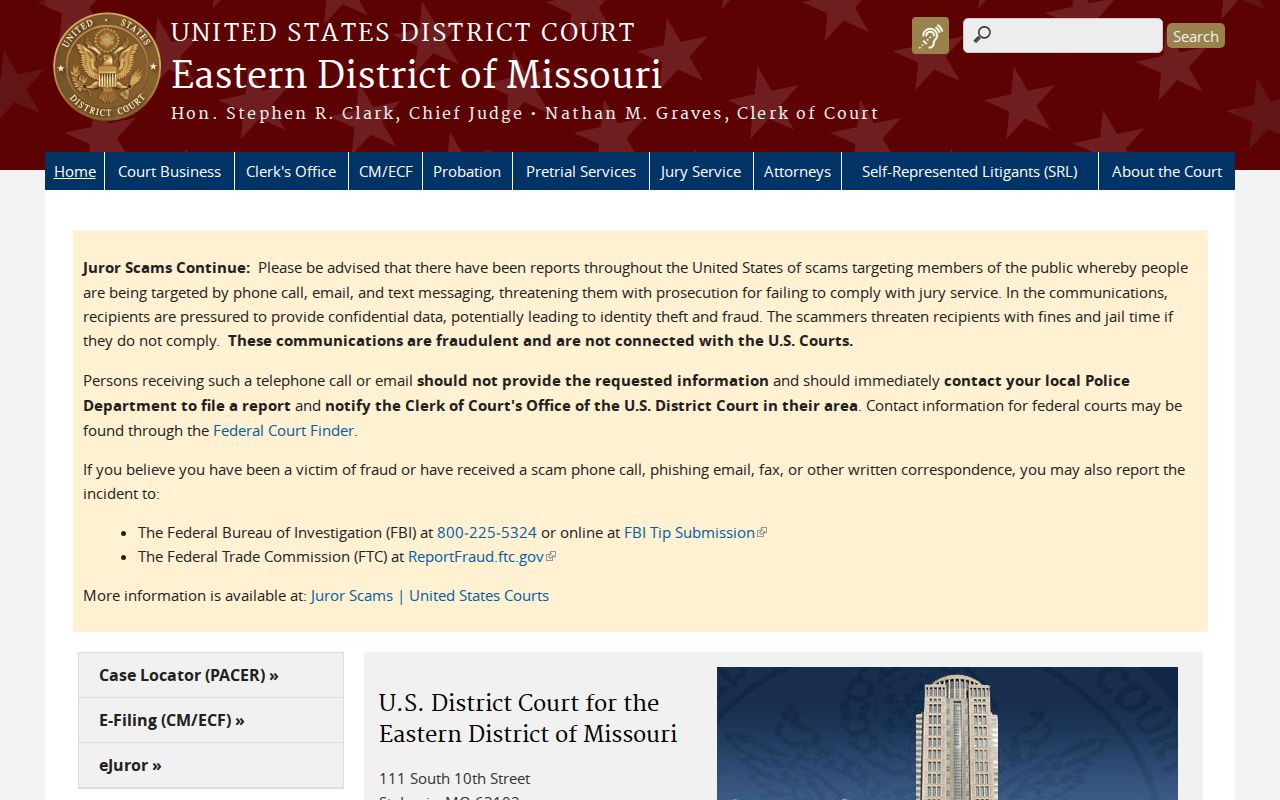
The Eastern District page is an official federal access route. A public docket there cannot promise that a warrant is visible. It also cannot settle current warrant status. The Western District of Missouri posts separate court and division information and describes its public court and PACER routes:
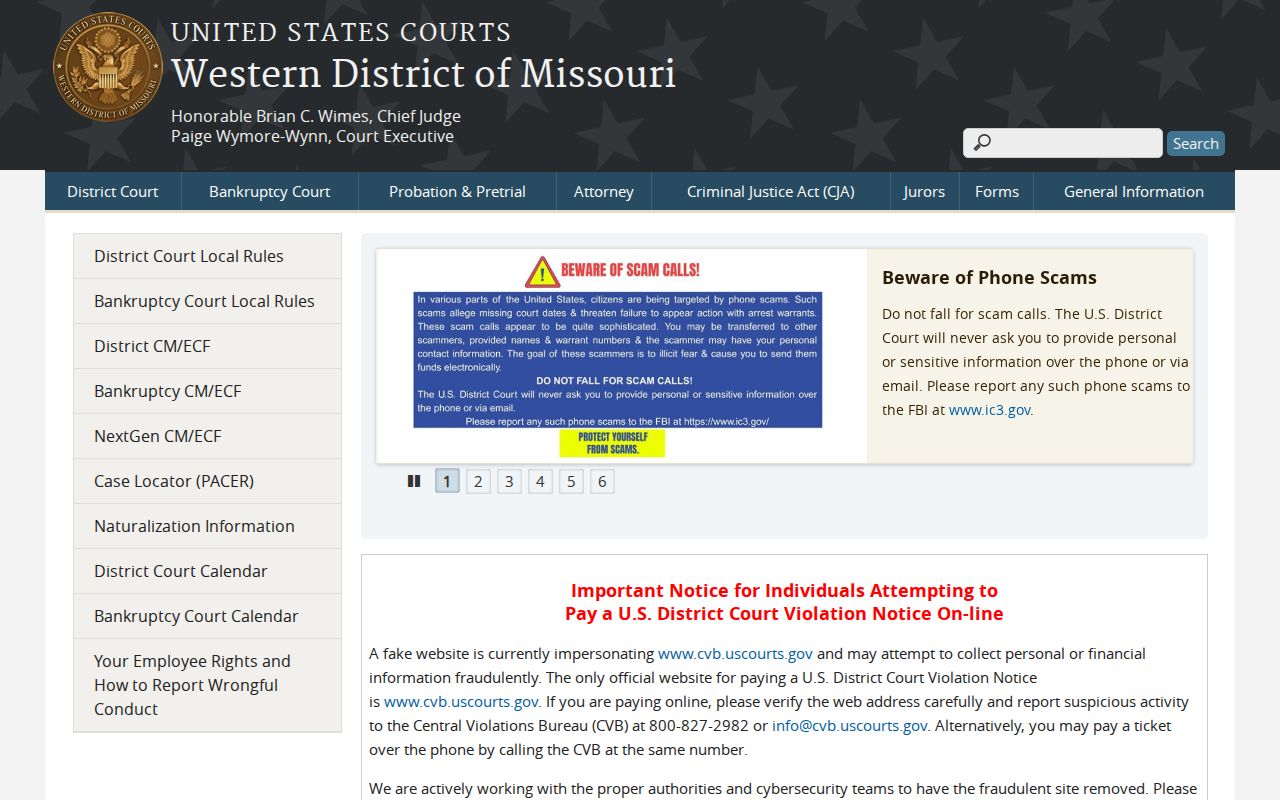
This federal court page is an access route. For Missouri readers it is not a public warrant roster or a substitute for status confirmation from the issuing court.
Federal Records Need a Separate Missouri Check
Federal docket access follows federal court rules and never replaces a Missouri state-court inquiry. PACER sells public docket and document access. Sealing and other restrictions apply. A federal case page may hide the warrant. A missing public filing does not prove federal process is absent. CourtListener or RECAP can be free. Those archives run incomplete, and they cover federal cases only, never a Missouri warrant question. Weigh any copy against the official court record. PACER charges 10 cents per page, caps most documents at $3, and waives quarterly charges of $30 or less. The Judiciary's notice says a temporary increase to 12 cents per page and a $40 quarterly waiver threshold starts January 1, 2027. Missouri courts never see that money. These are federal access charges, not fees to check or clear a Missouri warrant. Verify the current numbers on the official PACER pricing page before relying on them. The guide there also names its access fee and terminal options.
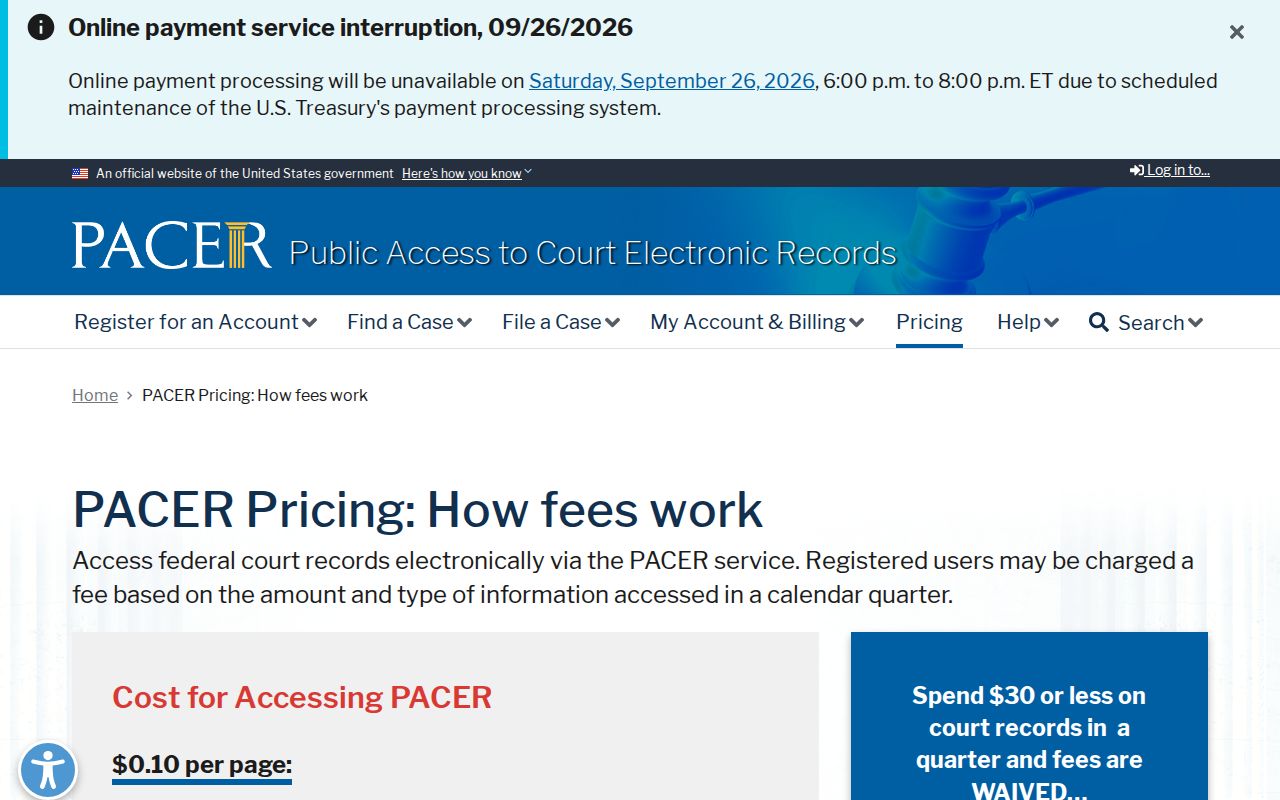
The PACER fee page covers federal docket access only. Missouri court fees are separate. It says nothing about a local warrant record or its resolution. Note: A federal docket, a state case portal, and a restricted law-enforcement index are separate records with different access rules.
Statewide Index vs Missouri County Warrants
Missouri’s public case portal, restricted law-enforcement systems, and local sheriff or police records do different jobs. The judicial order itself lives with the issuing court. Current case action stays there too. A county sheriff page with a working search is one local channel that may not cover another jurisdiction or every warrant type. Compare the record before treating a result as complete.
| Question | Statewide Information | County or City Record |
|---|---|---|
| Public starting point | Case.net case information, not a warrant index | Local court or sheriff information where available |
| Law-enforcement index | MULES and NCIC are restricted to authorized users | Agency operational record and service status |
| Coverage promise | No public statewide active-warrant search or blanket feed found | Local scope, publication, and update practices vary |
| Who confirms status | Statewide public sources cannot certify a warrant | Issuing court and service agency |
Know the county or city? Use Browse Counties to reach its local court and sheriff or police route in Missouri. A blank online result never proves the record is clear. When jurisdiction is uncertain, use the citation, court notice, or case details to find the issuing division first.
Missouri Circuits Do Not Share Warrant Lists
Missouri splits its courts into 46 judicial circuits covering 115 county-level jurisdictions, and no single public warrant docket ties them together. Each sheriff picks a channel. Some post a public page; others steer you through case lookup, a records request, a phone call, or the issuing clerk. The state sets no rule for which offices must publish a working warrant search. Municipal courts add a second layer, since Missouri law allows municipal warrant service through local police, a marshal, or a county sheriff where the statute applies. Coverage and update timing stay local even when a search exists. So figure out the court first. Grab the citation, summons, or case number and trace it to the issuing court and division. Then Browse Counties takes you to that county or independent city's official channels in Missouri. Ask the clerk one direct question: which service agency holds the current warrant record? That answer beats any list, because a county search only helps once you know the division that issued the warrant.
How Missouri Warrant Systems Went Digital
The digital trail is older than most people think. Missouri's trooper communications began with a switching program launched in 1969, and the system took the name MOLETS before becoming MULES in July 1971. Wanted-person and stolen-property files arrived in 1973. By July 1973 the network ran about 40 terminals handling 400,000 transactions monthly; after an NLETS interface, January 1974 brought 131 terminals and more than 1.4 million transactions. Treat those as historical scale figures, not warrant counts or public search volume. MSHP's communications history records these milestones in full. Missouri later rolled out MULES 4 statewide in December 2012 for law-enforcement entries and queries. On a separate track, the judiciary built its own court automation and Case.net for locating eligible public case information, though old partial-coverage figures should not be read as current reach. Speed for authorized users is not public access. MULES gave agencies faster queries, but it never became a warrant search for the public. Missouri publishes no official count of MULES warrants, county-entry coverage, update interval, or universal search fields. And under the 2026 access rule, an unreturned arrest warrant stays out of ordinary public case access until it comes back.
Missouri Traffic Flags Are Not Warrants
Missouri runs traffic programs that can touch a driver record without any arrest warrant behind them. FACT and NRVC handle certain failure-to-appear and traffic-compliance actions. A Lieu of Bail hold blocks an application for a new or duplicate license. It is neither a suspension nor a warrant. The Department of Revenue takes these driver-record steps after the court reports and compliance steps run their course.
- FACT/NRVC
- DOR suspension processes tied to covered traffic noncompliance. Reinstatement follows court compliance and the applicable DOR steps.
- Lieu of Bail hold
- A DOR flag affecting a new or duplicate license application. The court’s release order showing the fine paid is used to remove it.
- MULES / NCIC
- Restricted state and federal law-enforcement information systems. They are not public self-search tools.
- Case.net
- Missouri’s public case-information portal. It can locate eligible court records, but it is not an active-warrant index.
The Missouri Department of Revenue's FAQ in the database table maps out that separate driver-record route. Work any court warrant through the issuing division. When a license action rides along too, follow DOR's own instructions.